
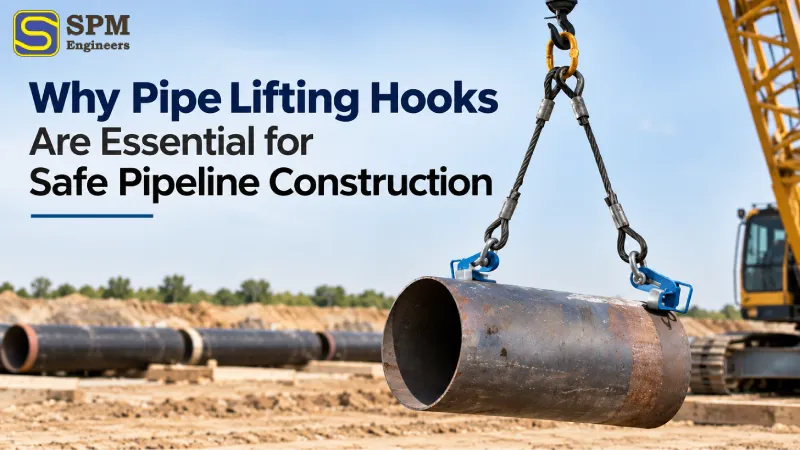
A pipe can suffer surface damage long before it reaches the trench. During lifting and repositioning, contractors need handling tools that give crews controlled contact with each pipe section. At SPM Engineers, we manufacture nylon-insert handling hooks for oil and gas pipeline work.
Our PIPE LIFTING HOOK range addresses a practical concern: moving pipes without unnecessary contact damage during construction or maintenance.
Protect Pipe Surfaces at the Point of Contact
A hard contact point can leave unwanted marks during repeated handling. Our hooks use a nylon insert at the contact area to help reduce scratches and dents on pipe surfaces. This feature matters when a project involves moving coated or finished pipe sections between work locations.
We develop pipe handling hooks for the demands of oil and gas pipeline operations. The nylon insert is one part of the handling arrangement, so the operator still needs suitable rigging, balanced lifting and careful positioning. Good equipment supports careful work; it does not replace the lifting plan.
Support Controlled Movement Around the Worksite
Pipeline projects involve more than one lift. Crews may need to shift sections during site preparation, installation and later maintenance activities. Our nylon-insert hooks are intended for handling pipes across these stages, with a design focused on secure engagement and controlled movement.
A PIPE LIFTING HOOK works best when its size and connection arrangement suit the pipe being handled. Before a lift, crews should check the intended engagement points, the surrounding clearance and the condition of the lifting arrangement. Those checks help teams use the equipment for its intended task rather than improvising with an unsuitable tool.
Match Hook Sizes to Pipe Diameters
One hook configuration cannot be assumed suitable for every project. We offer our nylon-insert pipe hooks in various sizes for different pipe diameters. We also manufacture customised designs based on customer requirements and specifications, giving buyers a route to discuss unusual handling needs. We can review whether a standard or customised hook suits the planned handling sequence.
When requesting a hook, share the pipe diameter, lifting method and application. Our team can then discuss the required configuration instead of relying on a general product name. For any pipeline lifting equipment, the selected assembly must be checked against the actual lift conditions and the approved site procedure.
Reduce Avoidable Handling Problems During Installation
Surface protection matters when pipes are lifted repeatedly before final placement. Our hooks combine a secure gripping approach with nylon inserts intended to limit contact marks. For project engineers, that means equipment selection can address both the movement of the section and the treatment of its surface.
We supply this product for new pipeline installation and maintenance work. Contractors working through multiple handling stages can evaluate our PIPE LIFTING HOOK alongside their pipe dimensions and handling sequence. Proper positioning and supervision remain necessary, especially where a suspended pipe must be moved near other equipment or personnel.
Check the Hook Before Every Planned Lift
Even a purpose-made product needs attention before it is used. Inspect the nylon insert for visible damage and confirm that the hook fits the pipe and planned handling arrangement. If an insert is worn or the contact area is unsuitable, stop and seek a suitable replacement or clarification before use.
Our manufacturing process includes quality checks, and we offer customised pipe hook designs where project specifications call for them. Buyers should request the relevant technical details and confirm the permitted loading arrangement for their chosen hook. The product page does not state a universal lifting capacity, so no single rating should be assumed.
Why Choose SPM Engineers?
We manufacture and export nylon-insert pipe handling hooks from Ahmedabad for the oil and gas pipeline industry. We offer different sizes and discuss customised designs against customer specifications. Our focus is practical: help buyers select a hook suited to their pipe diameter, handling method and surface-protection requirements, rather than choosing by appearance alone.
Conclusion
Safe pipe movement starts with choosing a suitable contact point and using it correctly. Nylon-insert hooks can help limit scratches and dents, while sound rigging practices remain essential for every lift. We manufacture these hooks for both pipeline installation and maintenance and offer options for different diameters. Before ordering, discuss your pipe dimensions, working conditions and required configuration with our team so the selected equipment fits the job.
Need a PIPE LIFTING HOOK for your next pipeline project? Contact SPM Engineers to discuss hook size, nylon insert design and customised requirements.
Call +91 9974928709
Or Email: info@spmengineer.com
To learn more about our product specifications, visit our PIPE LIFTING HOOK product page.