
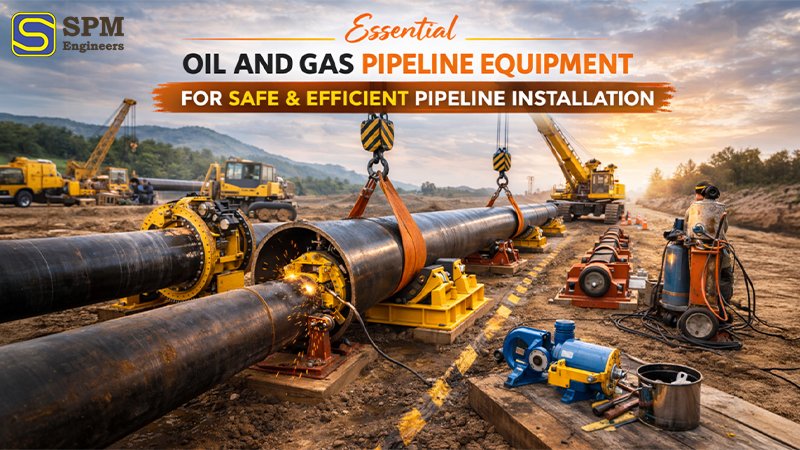
Pipeline installation is one of those jobs where everything looks “fine” right up until it isn’t. A slightly off alignment, a poorly handled pipe section, the wrong lifting support, or one rushed welding setup can turn into a delay that eats the whole schedule. And in oil and gas, delays don’t stay small. They become cost, safety pressure, and rework that nobody wants to own.
That’s why choosing the right pipeline tools isn’t just a procurement task. It’s a project decision. The truth is that safe and efficient installation depends heavily on the quality and suitability of your equipment — from clamps and rollers to lifting cradles and handling tools. Whether your worksite is in Oman, UAE, Vietnam, Nigeria, Algeria, Iraq, Malaysia, or even long-distance markets like the USA, Australia, Netherlands, and Spain, the core challenge stays the same: you need dependable equipment that performs consistently in real site conditions.
Why Oil & Gas Pipeline Equipment Matters More Than Most People Think
In pipeline construction, the equipment is not “supporting” the work — it is the work. The speed of installation, the quality of fit-up, the safety of handling, and the final integrity of the line depend on the tools used at every stage.
That’s why serious contractors don’t just search for random products. They search for a reliable Oil & Gas Pipeline Equipment Manufacturer with practical experience. They want equipment that helps welders’ line up faster, helps operators handle pipe safely, and helps supervisors keep quality consistent across long runs. And when projects are in harsh environments — desert heat in the Middle East, coastal moisture in Vietnam, or remote terrain in Africa — equipment strength and durability matter even more.
What Counts as Oil & Gas Pipeline Equipment?
The term Oil & Gas Pipeline Equipment covers the specialised tools and systems used during pipeline construction, pipe handling, welding alignment, lowering, and installation. This includes internal and external clamps, pipe rollers, lowering cradles, lifting and handling equipment, and other installation support tools.
A lot of buyers confuse this with general industrial tools. But pipeline equipment is different. It’s designed specifically for large-diameter pipes, heavy loads, outdoor job sites, and strict alignment and welding requirements.
For procurement teams, this matters because the wrong product category can lead to equipment that looks similar but performs poorly in real conditions. That’s one of the biggest reasons companies work directly with a proven pipeline equipment manufacturer rather than buying generic alternatives.
The Core Pipeline Installation Stages
Pipeline installation is not one single process. It’s a chain of steps. Each step needs equipment that supports safety, precision, and speed.
Here’s how it usually flows:
- Pipe handling and staging
- Pipe alignment and fit-up
- Welding support
- Coating protection during movement
- Lowering into trench
- Final installation and joining checks
At each stage, specialised pipeline construction equipment reduces labour time, improves consistency, and keeps risk under control.
Internal Line-Up Clamps: The Hidden Workhorse of Welding Accuracy
If there’s one tool that quietly controls weld quality, it’s the internal line-up clamp. This equipment sits inside the pipe and helps align the pipe ends during welding. It reduces mismatch and keeps the fit-up stable. This is especially valuable in long-distance pipelines where repeatability matters. A small alignment issue repeated across hundreds of welds becomes a major quality problem. For this reason, internal clamps are frequently regarded as some of the most important pipeline components for projects involving the oil and gas sector.
Many buyers’ sourcing oil and gas pipeline equipment in oman and oil and gas pipeline equipment in uae specifically look for clamp solutions that are rugged, reliable, and practical for field conditions. The same demand is rising quickly for oil and gas pipeline equipment in vietnam and oil and gas pipeline equipment in nigeria, where pipeline development and upgrades are actively expanding.
External Clamps and Fit-Up Tools: Speed, Safety, and Repeatable Alignment
External clamps support alignment from outside the pipe. They are commonly used where internal access is limited, or where certain pipe sizes and conditions make internal clamping less practical.
A good external clamp does three things:
- Holds the pipe securely without slipping
- Maintains alignment under vibration and handling
- Supports welding teams without constant manual adjustment
To maintain a more effective and seamless operation, these tools are frequently utilized in conjunction with other oil and gas pipeline equipment. On busy sites, that difference becomes obvious very quickly.
When you work with an experienced pipeline equipment manufacturer, you’re not just buying a clamp. You’re buying the correct clamp style, the correct support approach, and equipment designed for pipeline realities.
Pipe Rollers: The Equipment That Protects Coating and Reduces Manual Strain
Pipe rollers are essential for moving and positioning pipe sections during welding and fit-up. They reduce friction, protect coatings, and help crews position pipe with control rather than brute force. This matters because modern pipelines frequently use coated pipes. Coating damage is expensive, time-consuming to repair, and a known cause of long-term corrosion risk. So, pipe rollers become a key part of pipeline construction equipment, especially for high-spec projects.
In regions like pipeline equipment in algeria markets and large-scale Middle East projects, rollers are not optional. They’re expected. They keep the installation process smoother and reduce the chances of coating damage during staging.
Pipe Lowering Cradles: Safe Lowering Is Not a Small Detail
Lowering a pipe into a trench is one of the most sensitive phases of installation. This is where equipment quality has a direct connection to safety. Pipe lowering cradles support the pipe while lowering, helping distribute load and reducing coating damage. They also help crews guide the pipe into position more predictably. That predictability matters when the pipeline is long, heavy, and moving under lifting force. Lowering cradles are therefore frequently seen as necessary oil and gas pipeline equipment, particularly for large-diameter pipeline projects.
A lot of contractors sourcing oil and gas pipeline equipment in oman and oil and gas pipeline equipment in uae prefer cradle systems that handle heavy loads while keeping the pipe stable. Similar demand is growing for oil and gas pipeline equipment in nigeria and oil and gas pipeline equipment in vietnam, where pipeline infrastructure is expanding and contractors want safer site practices.
Handling Tools and Pipe Support Equipment: The Unseen Time-Savers
Pipeline work involves constant movement — staging, positioning, rolling, aligning, lifting. Handling equipment reduces time, reduces risk, and helps projects run consistently.
This includes:
- Pipe supports and stands
- Lifting accessories designed for pipeline use
- Tools that reduce manual pulling, dragging, and repositioning
These products often don’t get the spotlight, but they are part of the “daily efficiency” that separates a slow project from a controlled one. When buyers search for top pipeline equipment, they’re often thinking about the big items like clamps and cradles. But the smartest procurement teams also focus on the smaller support equipment, because those items affect productivity every single day.
What Procurement Teams Should Look for When Buying Pipeline Equipment
A lot of pipeline equipment looks similar in catalogues. The difference appears on site. Because of this, purchasers who deal with reputable manufacturers of oil and gas pipeline equipment usually evaluate the equipment based on actual performance rather than just claims made in brochures.
Here are the key factors you should focus on when buying:
- Build quality suited for outdoor pipeline environments
- Compatibility with common pipeline sizes used in your project
- Ease of use for field crews (not just workshop teams)
- Coating protection support where relevant
- Supplier reliability, documentation, and export experience
For buyers in overseas markets, supplier experience matters even more. Working with a trusted pipeline equipment exporter reduces shipping delays, specification confusion, and after-sales problems. That’s exactly why global contractors often shortlist SPM Engineers early, especially when they need stable supply and dependable product support.
Global Demand: Why Buyers Across Countries Source Pipeline Equipment from India
Pipeline projects are growing across multiple regions at the same time. From the Middle East to Africa to Southeast Asia, oil, gas, and infrastructure expansion is driving steady demand for equipment. Contractor’s sourcing oil and gas pipeline equipment in oman, oil and gas pipeline equipment in uae, and oil and gas pipeline equipment in vietnam often prefer suppliers who understand international standards and export requirements.
The same goes for buyers searching for oil and gas pipeline equipment in nigeria or pipeline equipment in algeria, where equipment durability and supply consistency matter due to tough site conditions. India has become a strong sourcing hub because manufacturers can deliver industrial-grade products with competitive value. But the key is choosing the right supplier — a reliable pipeline equipment manufacturer with proven performance and export readiness.
Why “Exporter Experience” Is a Real Advantage
A supplier might manufacture equipment, but exporting is a different skill set. A professional pipeline equipment exporter understands packaging, shipping timelines, documentation, and the practical expectations of international buyers.
That’s also why contractors often search for a top pipeline equipment exporter company when sourcing for large projects. They want fewer surprises. They want a supplier that can ship to UAE, Kuwait, Iraq, Malaysia, Australia, USA, Netherlands, Spain, and more without confusion.
SPM Engineers is known for supporting international clients and supplying equipment that is practical for real installation needs. That’s a key reason why buyers often consider them a dependable pipeline equipment exporter for long-term sourcing.
The Role of Parts and Component Manufacturing in Pipeline Success
Pipeline projects depend on equipment, but they also depend on parts. Replacement components, wear items, and related tooling all affect long-term performance. That’s why many buyers prefer working with an oil and gas parts manufacturer who understands the complete pipeline workflow. When parts availability is stable, equipment stays operational, and downtime reduces. This also supports long-term project continuity. Large pipeline contractors don’t want to switch suppliers every time a part is needed. They want one reliable partner.
Why Choose Us
When pipeline projects are under time pressure, equipment must work consistently. That’s where the supplier matters as much as the product. SPM Engineers focuses on providing practical pipeline installation equipment that supports weld quality, safe handling, and smoother installation flow. As a trusted Oil & Gas Pipeline Equipment Manufacturer, the company understands what contractors need on-site, not just in theory.
Buyers across markets such as UAE, Oman, Vietnam, Nigeria, Algeria, Iraq, Malaysia, and even international destinations like the USA and Australia value suppliers who can deliver reliable equipment with export-ready support. With SPM Engineers, clients get equipment designed for pipeline conditions, backed by experience and a clear focus on installation performance. That reliability is what turns a supplier into a long-term partner.
Conclusion
Pipeline installation is not the place for guesswork. The right equipment supports alignment, handling, coating protection, and safe trench lowering — and each stage plays a role in the final integrity of the pipeline. Choosing quality Oil & Gas Pipeline Equipment helps contractors reduce rework, keep welding consistent, and improve site safety without slowing the job.
Whether sourcing for projects in Oman, UAE, Vietnam, Nigeria, Algeria, or global regions like the USA and Australia, working with a dependable supplier matters. SPM Engineers supports pipeline projects with practical, field-focused equipment built for real installation conditions. When timelines and quality both matters, the right equipment choice becomes one of the smartest decisions in the project.
Contact SPM Engineers at +91 9974928709 or info@spmengineer.com for additional advice on Essential Oil and Gas Pipeline Equipment for Safe & Efficient Pipeline Installation.
Key Takeaways
- Quality alignment tools reduce welding mismatch and rework on long pipeline runs.
- Pipe rollers and lowering cradles protect coatings and improve safe handling.
- Choosing a proven pipeline equipment exporter helps international projects avoid supply delays.
- Contractors prefer a reliable pipeline equipment manufacturer for consistent site performance.
- SPM Engineers supports global pipeline needs with practical equipment for real conditions.
FAQs
What is the most important equipment used during pipeline installation?
Internal line-up clamps, pipe rollers, and lowering cradles are some of the most critical tools for alignment, movement, and safe trench installation.
Why do contractors prefer sourcing equipment from a trusted Oil & Gas Pipeline Equipment Manufacturer?
Direct manufacturers offer better product consistency, technical clarity, and long-term support compared to general suppliers.
Can pipeline equipment be shipped to Oman, UAE, Vietnam, and Nigeria?
Yes, many buyers source globally through an experienced pipeline equipment exporter with export-ready documentation and packaging.
What makes pipeline construction equipment different from standard industrial tools?
Pipeline tools are built for heavy loads, outdoor conditions, large diameters, and strict welding alignment requirements.
How do I select the right pipeline equipment for oil & gas industry projects?
Match equipment to pipe size, coating type, handling method, and site conditions, and work with a supplier who understands field installation needs.